· 3 min read
How to Describe a Drone Program in a Grant Application
Plain wording for CTE and STEM grant narratives: credentials, outcomes, and budget lines, plus what a curriculum vendor can and can't provide.
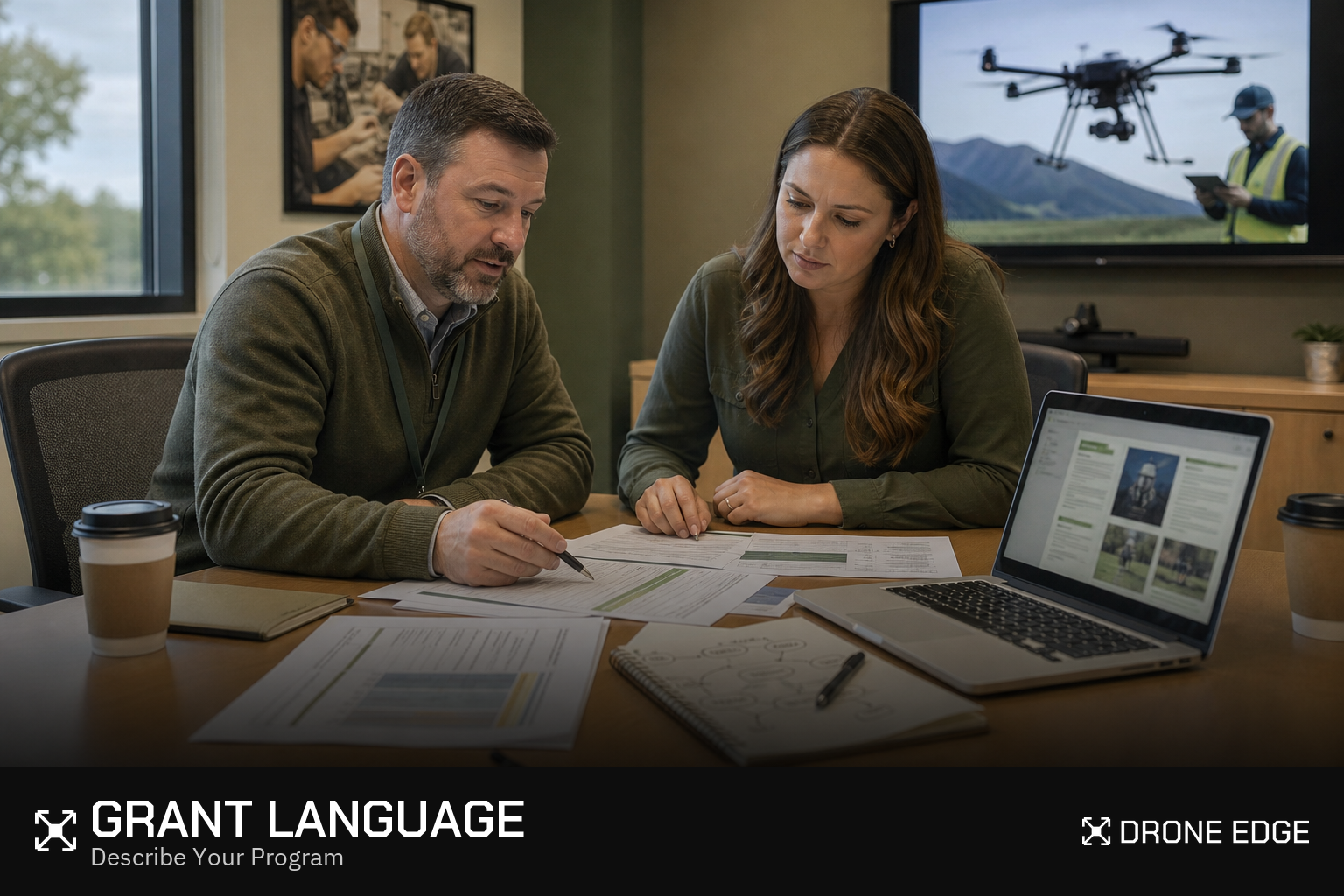
In short: Drone programs often fit the language schools already use for CTE, STEM, and workforce grants—but eligibility is never guaranteed from a vendor. This article gives you plain wording for the program description, outcomes, and budget lines in a CTE or STEM grant narrative. Your grants coordinator and district business office make the final call.
For a concise overview, start with our funding considerations page. For what changed in school funding this year, including new limits on buying DJI drones with federal money, read our 2026 guide to drone grants for schools.
Key takeaways
- Vendors cannot certify grant eligibility. We provide program descriptions and curriculum context—not approval.
- Software curriculum (Part 107 prep, assessments, teacher dashboards) is often easier to justify than hardware alone.
- Industry credentials like FAA Part 107 align with workforce and CTE outcome language in many RFAs.
- Budget the whole program, not just aircraft: spares, batteries, course seats, teacher onboarding, and year-two consumables.
- Pennsylvania programs may reference PAsmart and federal CTE context—always match the current RFA.
- Pilot semesters reduce budget risk when a full multi-year commitment is not yet approved.
How drone programs show up in grant language
Reviewers typically look for career-connected learning, industry credentials, STEM integration, and measurable student outcomes. A structured Part 107 pathway can support narratives about:
- Workforce readiness and employability skills
- Industry-recognized credential preparation (FAA knowledge test)
- Technology and engineering literacy (airspace, weather, operations)
- Assessment and progress data (exams, completion tracking)
Sample program description
Adapt this to your RFA's exact terms and your real plans:
Students in grades 10–12 prepare for the FAA Remote Pilot Certificate (Part 107), an industry credential for commercial drone operations, through a structured online course with unit exams and teacher progress tracking. Classroom flight activities run under a certificated remote pilot in command. The budget covers course seats, aircraft, batteries and spares for full class periods, and teacher onboarding, and the program will track enrollment, unit completion, and exam scores each term.
Hardware purchases (airframes, simulators) may appear in the same grant or a separate capital request. Be explicit about which line items are curriculum software vs equipment when drafting budgets.
What Drone Edge provides for grant packets
On request during sales, we can supply program description language covering:
- Course scope (FAA Part 107 aligned units, practice assessments)
- Delivery model (browser-based, hybrid/async, teacher-led)
- Org accounts and manager dashboard for progress visibility
- Intended outcomes (knowledge test preparation—not guaranteed pass rates)
We do not provide: legal grant writing, eligibility determinations, or statements that a specific RFA will approve your application.
Pennsylvania and federal context (high level)
Many Pennsylvania districts discuss drone programs alongside PAsmart and federal Perkins/CTE priorities. Rules, allowable costs, and deadlines change. Link reviewers to official state and federal sources in your application; use our funding page only as background for internal alignment.
Pilot vs full-year funding strategy
If full-year funding is uncertain, a pilot semester (smaller seat cap, shorter term) can produce evidence for the next cycle: enrollment, completion, exam participation, teacher feedback. School packages start at $79 per seat; ask about pilot terms during a consultation.
Questions answered
Can we list Drone Edge as an allowable cost?
Depends on the grant and your district's interpretation. Software subscriptions and digital curriculum are often allowable under CTE/STEM categories—confirm with your grants office.
Will you sign grant-specific forms?
Standard quotes, W-9, and vendor onboarding yes; non-standard grant attestations go to leadership review.
Do you include FAA exam fees?
No. The FAA knowledge test fee is paid separately to the testing center.
What about student data and privacy?
Share our Privacy Notice and Terms with IT and legal. DPA requests are handled case by case.
Next steps
- Read the funding considerations page.
- Align with your grants coordinator on the active RFA.
- Book a consultation with student count, timing, and funding timeline.
Last updated: October 2026. Not legal or grant advice.
Comments
Loading comments...
Sign in to join the conversation.